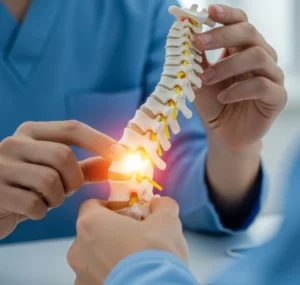
What Is Flexion-Distraction Therapy and How Does It Help Back Pain?
 Dr. Hitchcock8 min read
Flexion-distraction therapy, also called lumbar disc traction, is a gentle, non-surgical technique that uses a specialized table to create controlled spacing between the vertebrae, taking pressure off compressed discs and nerves in the lower back. At Athens Spine and Injury, this technique is used as part of back pain treatment for patients dealing with disc-related pain that hasn’t responded to basic adjustments alone.
Not every case of back pain responds the same way to the same technique, and disc-related pain is a good example. A standard adjustment can restore movement to a restricted joint, but when the actual problem is a bulging or herniated disc pressing on a nerve, a different approach is often needed. That’s where flexion distraction therapy comes in.
What Flexion-Distraction Therapy Actually Is
Flexion-distraction is performed on a specialized table that gently flexes and stretches the lower spine in a slow, controlled rhythm. Rather than a quick adjustment, the motion is smooth and rhythmic, gradually creating more space between the vertebrae. This added space reduces pressure inside the disc itself and takes tension off nearby nerve roots, which is why it’s often described using the broader term spinal decompression.
What It’s Used to Treat
This technique is most commonly used for herniated or bulging discs, sciatica caused by nerve compression in the lower back, degenerative disc disease, and chronic low back pain that hasn’t improved with standard adjustments alone. It’s also frequently used for patients recovering from an auto accident where disc-related injury is suspected, since the gentle nature of the technique fits well with acute, sensitive injuries — and consistent documentation of that recovery matters alongside the treatment itself when the injury is accident-related. It can also be part of the plan for hip-area pain that’s actually originating from the lower back rather than the hip joint.
A Technique With a Long Track Record
Flexion-distraction isn’t a new or experimental approach — it’s a well-established technique that’s been used in chiropractic practice for decades specifically for disc-related conditions. Athens Spine and Injury has added it to the range of treatment options available for back pain patients, reflecting four decades of hands-on chiropractic experience in identifying which technique fits which condition. Its long history of use in treating lumbar disc issues is part of why it remains a standard, trusted option for conservative disc care rather than a niche add-on.
How It’s Different From a Standard Adjustment
A standard chiropractic adjustment typically applies a quick, targeted force to restore motion to a joint. Flexion distraction works differently: instead of a single quick motion, it uses a slow, repetitive stretching action over the course of several minutes. This makes it a noticeably gentler option, and it’s often the preferred technique when a disc issue makes a standard adjustment uncomfortable or inappropriate.
What a Session Actually Feels Like
Patients typically lie face-down on the treatment table, which is divided into sections that move independently. As the table gently flexes at the lower back, most patients describe the sensation as a mild stretch rather than discomfort. Sessions usually last a short portion of a visit and are often combined with other treatments like soft-tissue work or corrective exercises, depending on the full treatment plan.
Who Tends to Benefit Most
Flexion-distraction tends to work well for patients with disc-related back pain, sciatica that radiates down the leg, and chronic lower back stiffness tied to reduced disc height. It’s also a reasonable option for patients who want to avoid more invasive interventions and are looking for a conservative, non-surgical approach before considering anything more aggressive.
What to Expect Over a Course of Treatment
Results build gradually rather than after a single session. Many treatment plans involve multiple sessions per week initially, tapering as symptoms improve. Patients are usually reassessed periodically to determine whether the frequency should change, and home exercises are often introduced alongside in-office sessions to support the results between visits.
Is It Right for Everyone?
Flexion-distraction isn’t the right fit for every back pain case — some patients respond better to standard adjustments, soft-tissue therapy, or a combination of approaches. This is exactly why a proper evaluation matters before starting any specific technique: matching the treatment to the actual cause of the pain, whether that’s a herniated disc, joint restriction, or muscle strain, is what determines the outcome.
How This Differs From At-Home Traction Devices
Patients sometimes ask whether an over-the-counter inversion table or at-home traction device offers the same benefit. The core concept is similar — creating space in the spine to relieve pressure — but a chiropractic table allows a trained provider to control the angle, pace, and targeted spinal level precisely, and to adjust that in real time based on how the patient responds. Generic at-home devices apply a fixed motion to the whole spine rather than targeting the specific level where the disc problem actually is, which is part of why clinical outcomes and home-device outcomes tend to differ.
What Happens If Flexion-Distraction Alone Isn’t Enough
For most disc-related back pain, flexion-distraction combined with complementary care resolves symptoms without further intervention. When pain persists despite a full, consistent course of conservative treatment, that’s typically the point where additional imaging or a referral for further evaluation becomes appropriate — a decision made based on how the patient is actually responding, not on a fixed timeline.
Starting With an Evaluation
If lower back pain has been resistant to rest, over-the-counter treatment, or general stretching, a proper evaluation can determine whether disc involvement is part of the picture and whether flexion-distraction therapy is an appropriate next step. Athens Spine and Injury evaluates each case individually rather than applying one treatment across the board.
Supporting the Results Between Visits
In-office sessions do most of the work, but what happens between visits matters too. Patients are typically given a short set of home exercises aimed at maintaining the space and mobility gained during treatment, along with guidance on positions and movements to avoid while a disc issue is healing — prolonged sitting and improper lifting mechanics are common culprits for setting recovery back. Following this guidance consistently is often what separates a treatment plan that holds up from one that requires repeated restarts.
What the First Visit Looks Like
Before flexion-distraction is used, the first visit focuses on determining whether it’s actually the right fit. This typically includes a history of the pain, orthopedic and neurological testing to check for nerve involvement, and an assessment of how the spine moves and where it’s restricted. Patients with acute, severe nerve symptoms or certain other findings may need a different starting approach, which is why this evaluation step comes before any treatment technique is selected, rather than being applied as a default for every back pain complaint.
Frequently Asked Questions
What is flexion-distraction therapy?
Flexion-distraction, also called lumbar disc traction, is a gentle chiropractic technique performed on a specialized table that stretches the lower spine in a slow, controlled motion to relieve pressure on discs and nerves.
Does flexion-distraction therapy hurt?
No. Most patients describe the sensation as a mild, comfortable stretch rather than discomfort, which is one reason it’s often used for disc-related pain that a standard adjustment might aggravate.
How is flexion-distraction different from spinal decompression machines?
The terms are often used interchangeably. Flexion-distraction is a hands-on chiropractic form of spinal decompression performed on a specialized table, distinct from motorized traction devices used in some other settings, though both aim to reduce pressure on the spine.
Can flexion-distraction therapy help sciatica?
Yes. When sciatica is caused by a disc pressing on a nerve root in the lower back, flexion-distraction can reduce that pressure and ease the radiating leg pain associated with it.
How many sessions of flexion-distraction are usually needed?
This varies by case, but many treatment plans start with multiple sessions per week, tapering in frequency as symptoms improve and reassessment shows progress.
Is flexion-distraction therapy a substitute for surgery?
For many patients with disc-related back pain, it’s used as a conservative option before considering more invasive interventions, though the right approach always depends on the specific diagnosis and severity of the condition.
Who is a good candidate for flexion-distraction therapy?
Patients with herniated or bulging discs, sciatica, degenerative disc disease, or chronic low back pain that hasn’t responded to standard adjustments are often good candidates, determined through an initial evaluation.
Can I combine flexion-distraction with other chiropractic treatments?
Yes. It’s frequently combined with soft-tissue therapy, corrective exercises, and standard adjustments as part of a broader treatment plan tailored to the specific cause of the back pain.
Is flexion-distraction therapy the same as an at-home traction device?
Not quite. Both aim to create space in the spine, but a chiropractic table lets a trained provider control the angle, pace, and specific spinal level being treated and adjust it based on the patient’s response, unlike a fixed at-home device.
What if flexion-distraction therapy doesn’t fully resolve my back pain?
Most disc-related back pain improves with a consistent course of flexion-distraction and complementary care. If pain persists despite full, consistent treatment, that’s typically when additional imaging or further evaluation becomes the appropriate next step.
Does insurance typically cover flexion-distraction therapy?
Coverage depends on the specific insurance plan and diagnosis. Many patients use health insurance, and auto-accident-related cases are often covered differently through personal injury protection or a liability claim, which is worth discussing during an initial visit.
What should I avoid doing between flexion-distraction sessions?
Prolonged sitting and improper lifting mechanics are common setbacks during disc-related recovery. Following the specific home guidance given after each session helps protect the progress made during treatment.
Is flexion-distraction a new or experimental technique?
No. It’s a well-established chiropractic technique that’s been used for decades specifically for disc-related conditions, and it remains a standard, trusted option for conservative back pain care rather than a niche or experimental add-on.
What happens during the first visit before flexion-distraction starts?
The first visit focuses on determining fit through a pain history, orthopedic and neurological testing for nerve involvement, and an assessment of spinal movement, since some patients may need a different starting approach before this technique is introduced.