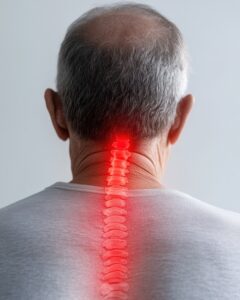
Could Your Afternoon Headaches Be Coming From Your Neck?
 Dr. Hitchcock1 min read
It starts predictably—somewhere between 2 and 4 PM, a dull pressure builds at the base of your skull or along one side of your head. You reach for ibuprofen, blame the screen, or assume you need more water. But if this happens day after day, it's worth asking whether the origin is actually in your neck rather than your head.
What Are Cervicogenic Headaches?
How to Recognize a Cervicogenic Pattern
Several distinguishing features suggest a cervical origin. The headache typically begins at the base of the skull and spreads toward one side. Neck stiffness often accompanies the head pain. Certain neck movements—especially rotation or extension—can trigger or worsen the headache. And the timing is consistent: symptoms emerge after prolonged forward head posture during desk work, driving, or device use.
Why Desk Work Drives This Pattern
Your head weighs approximately 10–12 pounds in neutral position. At a 45-degree forward tilt—common when looking at a laptop on a desk—the effective load on your cervical spine increases to roughly 49 pounds. Sustained at that angle for hours, the posterior cervical muscles fatigue, upper cervical joints compress, and nerve roots can become sensitized. The result is a headache that arrives like clockwork every afternoon.
Practical Ergonomic Adjustments
Your monitor should be positioned at eye level and approximately an arm's length away, so your head can remain in a neutral position during extended work sessions. Setting a movement reminder every 30–45 minutes gives your cervical spine the opportunity to decompress. Chin tuck exercises—gently drawing the head back to counteract forward head drift—are one of the most effective daily habits for cervical health.